ServicesWhole-Home Filtration
Whole-Home Water Filtration in Lakeland
One system treats your water as it comes into the house, before it gets to any faucet. Showers, laundry, the kitchen and the water heater all run on filtered water. The people who size your system are the same ones who install it and look after it later.
What whole-home filtration does
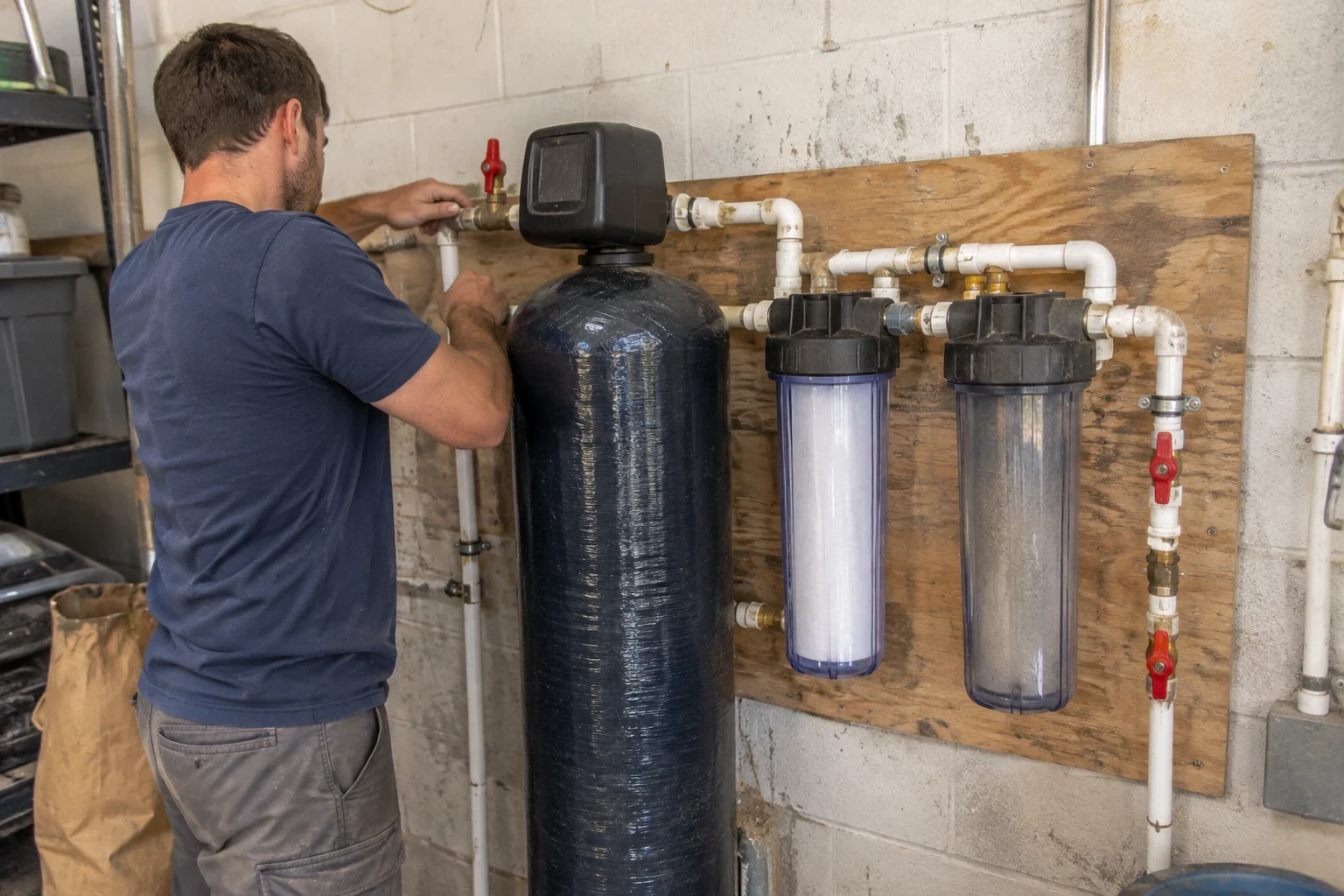
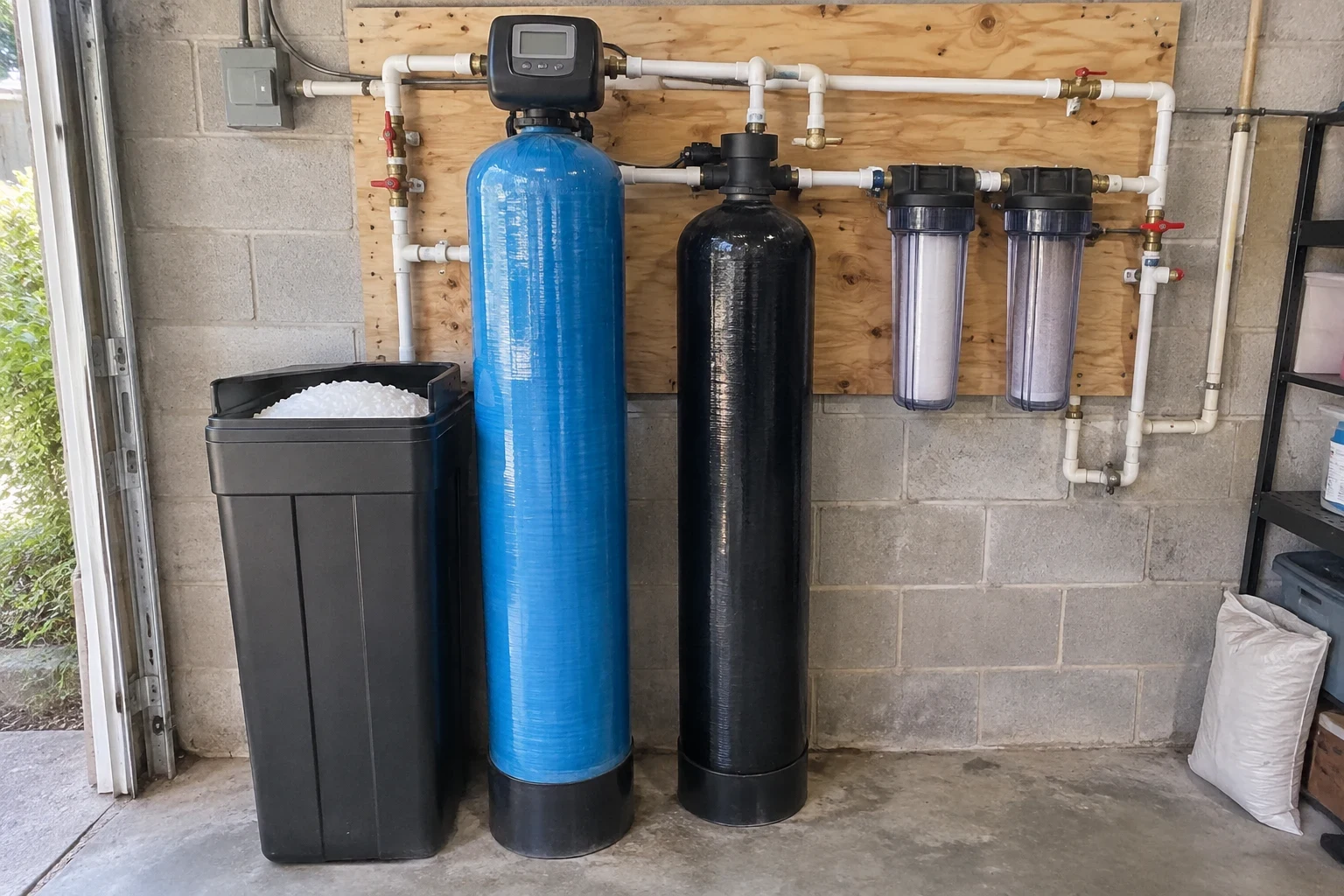
A whole-home system, also called point-of-entry filtration, treats your water once, right where the main line comes into the house. Everything past that point gets filtered water: faucets, showers, the washer and the water heater. Most setups pair a sediment prefilter with a tank of activated carbon. The prefilter catches sand and grit. The carbon takes out chlorine taste and smell, plus much of what makes water look or taste wrong.
It is the right fit when the problem shows up all over the house, not only at the kitchen sink. If the bathroom smells like bleach every time the shower runs, or grit keeps plugging screens in several rooms, one under-sink unit will not reach it. If drinking water is all you care about, reverse osmosis at the kitchen sink may be the better buy, and we will tell you that.
We keep our team small on purpose. The person who looks over your plumbing on the first visit is there on install day, and the same crew comes back for your filter changes.
What comes with the install
- 01
Sized for your household
We look at how many bathrooms you have and how many people live there. Those numbers set the tank size and flow rating, so pressure holds up when two or three taps run at once.
- 02
Sediment stage up front
The first stage is a cartridge that catches sand, silt and rust flakes before the water reaches the carbon. That helps the carbon last longer. It is also the piece you will change most often.
- 03
Carbon tank and valve
The tall tank holds the carbon media. Some models rinse themselves on a timer and need a drain line nearby. Others run water straight through and need no drain. We tell you which type you are getting and why it fits your house.
- 04
Bypass valve
Every system gets a bypass. If the filter ever needs service, you turn one handle and water flows around it, so you still have water in the house.
- 05
Testing the joints, cleanup and a quick lesson
Once the system is tied into the main line, we check every fitting for drips, flush the new carbon and clean up after ourselves. Before we leave, we show you the bypass and explain what gets replaced and when.
Questions about Whole-Home Filtration?
Call(863) 656-3643Signs your house needs filtering at the main line
Bleach smell during showers
Hot water lets chlorine escape into the air of a closed bathroom. Carbon at the main line takes it out before the water reaches any shower.
Grit in aerators and shower heads
If you keep cleaning sand or fine particles out of faucet screens and shower heads, that sediment is coming in with your supply.
Bad taste at every faucet
When water from the bathroom sink tastes just as off as the kitchen tap, a filter on one sink leaves the rest of the house the same.
Streaks on fixtures and laundry
Orange or brown marks in tubs, toilets or white clothes can mean iron or sediment. Some of those cases need a different setup, which we cover on our Well Water Treatment page.
Dry skin and hair
Many customers notice showers feel softer on the skin once chlorine is out of the water. That is a comfort issue, not a safety one, and still a fair reason to filter.
From first call to filtered water
- 1
Start with a conversation
Describe what you see, smell or taste, and give us a quick picture of the house. We ask where the supply pipe enters and whether a softener or other equipment is already there.
- 2
We see the spot in person
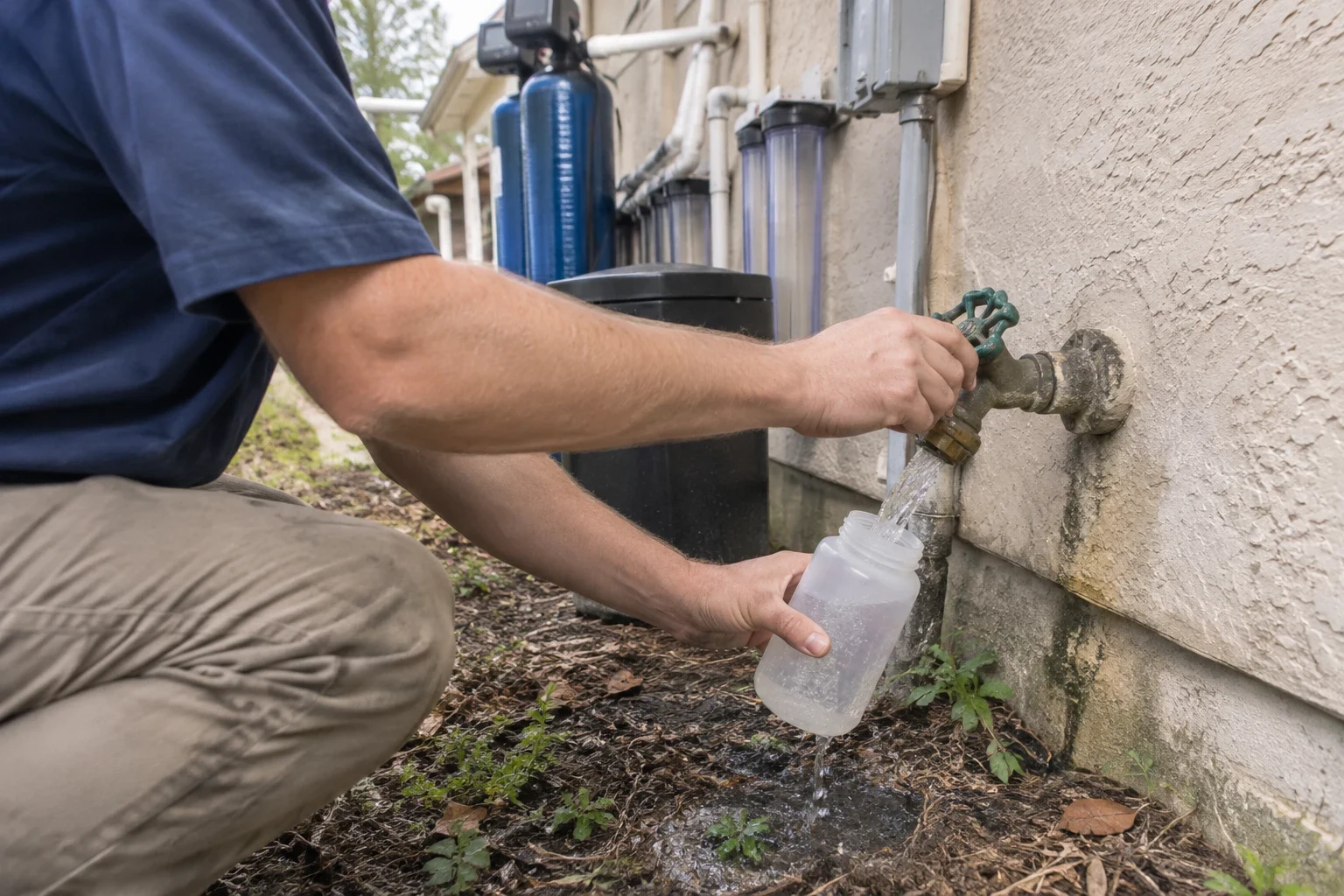
We visit and look at where the system would go. Around here the main line often rises outside near a hose spigot or runs into the garage. We check the pipe size, how close a drain is and whether there is power for a valve.
- 3
A written quote, line by line
The quote breaks out equipment, parts and labor. You know what each piece costs before we cut any pipe.
- 4
The install
Your water is shut off for a few hours at most, often less. We connect the system with its bypass, run the carbon until the water comes out clear and check each joint for drips. The crew who quoted the job does the work.
- 5
Support after we leave
A 1-year warranty covers our installation workmanship. We also keep helping with maintenance, filter replacements and any service your system needs down the road.
What goes into the price
Every house is plumbed a little differently, so we quote after we have looked at yours. One part of the price is the equipment. The other part is where it goes and how much work it takes to tie it in.
- How big the system needs to be
- A house with several bathrooms and a full household draws a lot of water at the same moment. Keeping up with that takes a larger tank holding more media, and the price goes up with it.
- The type of carbon
- Standard activated carbon handles chlorine. Chloramine calls for catalytic carbon, which costs more. Our Chlorine & Chloramine Removal page walks through how the two differ.
- Where the main line sits
- Tying in at an easy spot near the garage is quicker than rerouting pipe to a better location. If the tank ends up outside, it may also need a cover to keep the sun off it.
- Drain and power
- A backwashing system has to send rinse water somewhere, and many valves need an outlet. When the closest drain or plug is far away, the job takes extra parts and extra time.
Common questions about whole-home filters
Does a main-line filter cut my water pressure?
Not if it is the right size. When pressure drops after an install, the usual cause is a tank too small for how much water the house uses at once. We size the tank by your bathrooms and the number of people at home, so a shower and the washing machine can run at the same time.
Does a carbon filter fix hard water too?
No. Carbon takes care of taste, smell and grit, but it does not remove the minerals that cause scale. If scale is a problem, a softener can go in next to the filter. Our Water Softeners page explains how the two work side by side.
What needs changing, and how often?
The sediment cartridge usually gets swapped a few times a year, more if your water carries a lot of grit. The carbon lasts much longer, depending on how much water your home uses. We set up a schedule for your system and can do the changes for you.
Can you put the system outside?
Yes. A lot of Florida houses have the supply pipe on an outside wall, and that is often the easiest place to tie in. We add a cover so the tank and valve stay out of the sun and rain.
What if something you installed fails?
Our installation workmanship carries a 1-year warranty. If a joint we made starts leaking or a part we put in was installed wrong, we come back and fix it.
Filtered water in the shower, the kitchen and the laundry
Let us know what bothers you about your water and where the supply pipe comes into your house. We will explain which setup makes sense and what install day looks like.