ServicesWell Water Treatment
Well Water Treatment in Lakeland
Sulfur smell in the shower, rust rings in the toilet, chalky scale on the faucets. A private well can bring all of it into your home, and we treat it. We size the system to your well, most installs take one day, and the person who sees your setup is the one who installs it.
What well water treatment does for your home
A private well gives you water with nothing added and nothing taken out. That is the upside and the problem. Wells around central Florida often pick up sulfur, iron and hardness from the ground, and none of that gets handled before it reaches your kitchen.
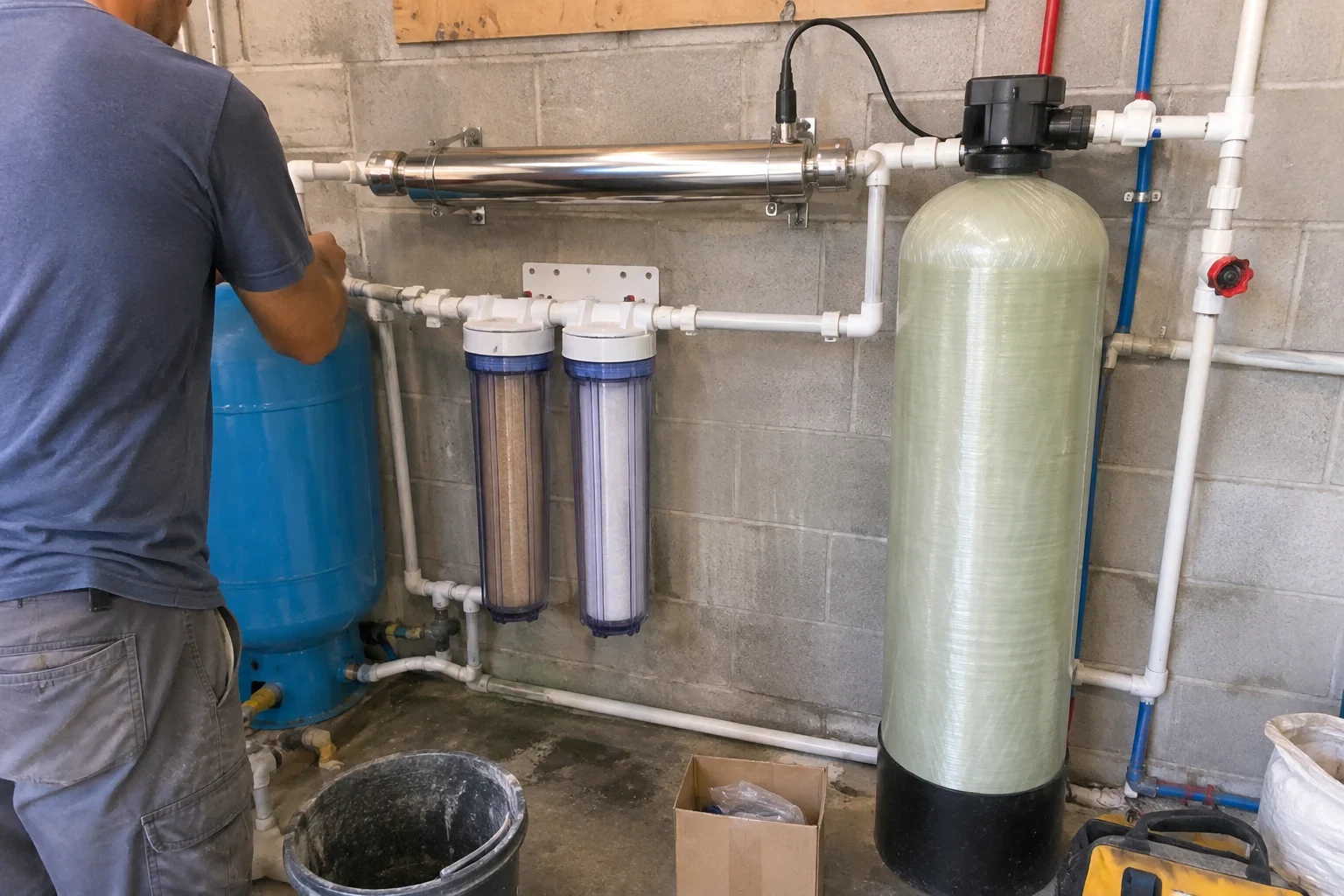
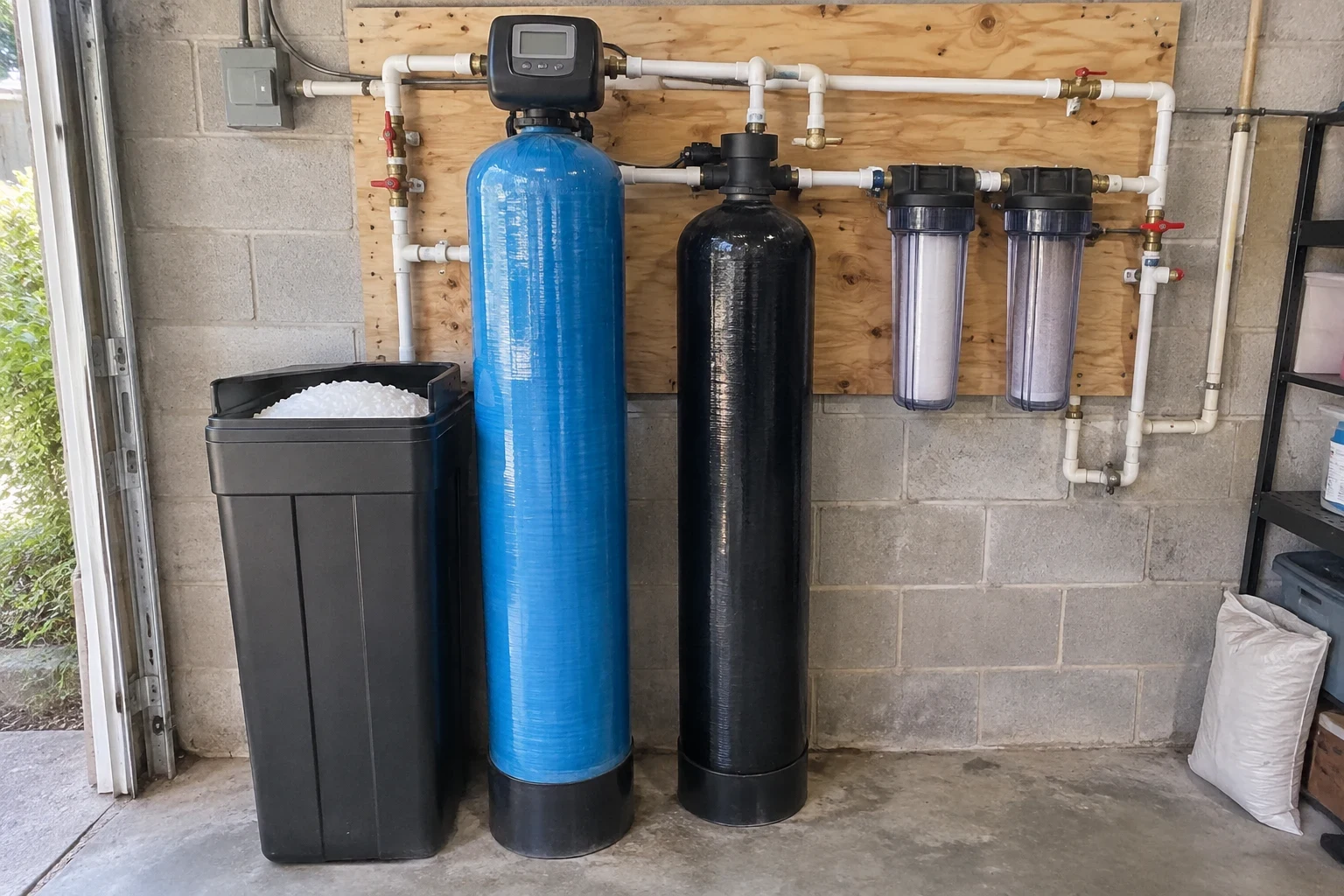
We put equipment between the well and your house plumbing that pulls those things out. Usually that means a sediment stage, a filter that removes iron and the sulfur smell, and sometimes a softener. You get water that does not stink, does not stain, and does not choke your water heater with scale.
We are a small team. The person who walks your well and talks with you is the same person on the install, and the same one you reach later with questions. Nothing gets lost in a handoff.
What the work includes
- 01
Sediment filtration
Sand and grit come up with the water, especially after a pump is replaced or the water table shifts. A sediment stage catches it first so it does not clog the equipment after it or your faucet aerators.
- 02
Iron and sulfur removal
This is the main job on most wells. We usually put in an oxidizing filter. It changes the iron and rotten-egg gas you cannot see into small solid bits that stay caught in the filter bed, and on a set schedule it rinses those bits out to the drain.
- 03
Softening only when hardness is there
Hardness changes a lot from one well to the next. When your water carries enough calcium and magnesium to scale up glassware and the water heater, a softener goes in behind the iron filter. When it does not, we tell you plainly and skip it. Our Water Softeners page covers that side in more detail.
- 04
Drinking water at the kitchen sink
Some families want one more step for the water they drink and cook with. A small reverse osmosis unit under the sink does that. It is optional, and we only bring it up if it fits what you told us.
- 05
Plumbing, bypass and setup
Every system goes in with a bypass valve so you can keep water running if anything ever needs service. We set the backwash and regeneration times around when your household uses the least water.
Questions about Well Water Treatment?
Call(863) 656-3643Signs your well water needs treatment
Rotten-egg smell
That is hydrogen sulfide. It is often worst in the shower and with hot water, because the water heater can make it stronger.
Orange or brown stains
Iron leaves rust-colored rings in toilets, streaks in sinks and a dingy tint in white laundry. Bleach usually makes it worse.
Chalky buildup on fixtures
Minerals collect on showerheads and leave cloudy spots on drinking glasses. Inside your water heater, that same layer piles up and wears the tank out sooner.
Slime in the toilet tank
A reddish or gray slimy film can mean iron bacteria in the well. It needs a different approach than plain iron, and we plan for it.
Sand in aerators and appliances
If faucet screens clog every few weeks or the washer inlet keeps filling with grit, sediment is getting through.
How a well water job runs
- 1
A phone call first
You tell us what you are seeing and smelling, how old the well is and how many people live in the house. That tells us what to look for on the visit.
- 2
We look at your well and plumbing
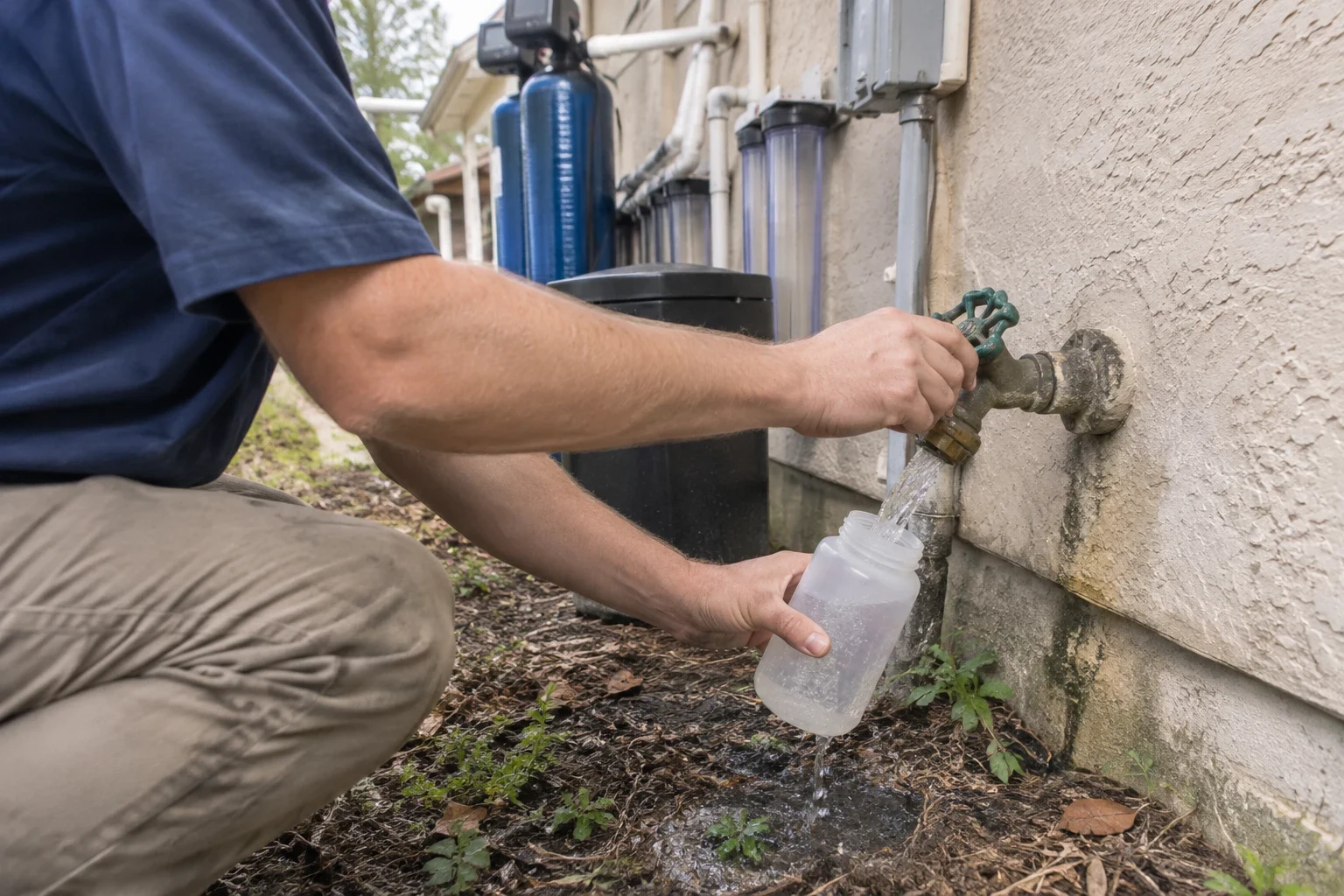
We check the pump, pressure tank and the spot where the water line enters the house. We look at the stains, smell the water at a few taps and figure out where equipment can go and where it can drain.
- 3
A written estimate
You get a line-item estimate that lists each piece of equipment and why it is there. If one stage will fix the problem, we do not sell you three.
- 4
Install day
We shut the water off, plumb in the bypass and the system, then flush it and set the controls. We check your pressure afterward and clean up the work area before we leave.
- 5
Walkthrough and follow-up
We show you the bypass, the settings and what maintenance looks like. After that, you get ongoing customer support for maintenance, filter replacements, and service needs.
What moves the cost
No two wells are the same, so we price each job after we see it. The biggest driver is what is in your water and how much of it you use. Your estimate spells out every item so you can see where the money goes.
- What has to come out
- Sulfur alone needs less equipment than sulfur, iron and hardness together. Iron bacteria adds another step.
- Your pump and household size
- The system has to keep up with your well pump's flow and your busiest morning. Bigger homes and more bathrooms need larger tanks.
- Where it goes and how it drains
- A clear spot near the pressure tank with a drain and an outlet nearby is simple. Long pipe runs or adding a drain line take more time.
- Old equipment
- If there is a worn-out filter or softener in the way, removing it is part of the job. Our System Replacement page covers swapping out older units.
Well water treatment questions
Is well water treatment different from what city homes get?
Yes. City water is already treated and mostly needs taste and chlorine work, which our Chlorine & Chloramine Removal page covers. Well water usually needs iron, sulfur and sediment handled, and that takes different equipment.
Will the equipment slow down the water at my faucets?
It should not if it is the right size. We pick equipment that keeps up with the flow your pump puts out. Once it is running, we check pressure at your taps so you can see the result for yourself.
How much upkeep does it need?
Most iron and sulfur filters clean themselves by backwashing on a timer. Sediment cartridges get swapped every few months depending on your well. Softeners need salt. We walk you through all of it, and you can call us for filter replacements and service.
Will this get rid of the smell from my hot water?
Removing the sulfur before it reaches the water heater takes care of most of it. If the smell is only on the hot side, the heater's anode rod can be part of the cause, and we will point that out when we look.
Is the installation covered?
Yes. Our work comes with a 1-year installation workmanship warranty. If something we installed is not right, call us and the same crew comes back to make it right.
Ready to stop the smell and the stains
Tell us what your water is doing and how your well is set up. We will set a time to come look, and you will deal with the same people from start to finish.