ServicesChlorine & Chloramine Removal
Chlorine & Chloramine Removal in Lakeland, FL
A bleach smell at the sink or a chemical edge on your morning coffee usually comes from the disinfectant the city adds to your water. We install carbon systems at the main line that take out chlorine or chloramine, so every faucet and shower in your home runs cleaner-tasting water.
What this service fixes, and why the two need different carbon
City water is disinfected so it stays safe on its way through miles of pipe. Utilities use chlorine, chloramine, or switch between them during the year. Both do their job. By the time the water reaches your kitchen, though, a lot of people would rather not taste or smell it.
The two are not the same problem. Plain chlorine comes out easily with a standard activated carbon bed. Chloramine is chlorine combined with ammonia, and it is much more stable in water. It needs catalytic carbon and more contact time, which means a tank sized for your flow. A filter rated only for chlorine lets much of the chloramine pass through.
We look at your utility's current water quality report with you to see which one your home gets, then size the system to how your household uses water. The person who walks your home on the first visit is on the crew that installs the system and comes back for service.
What goes into a chlorine and chloramine system
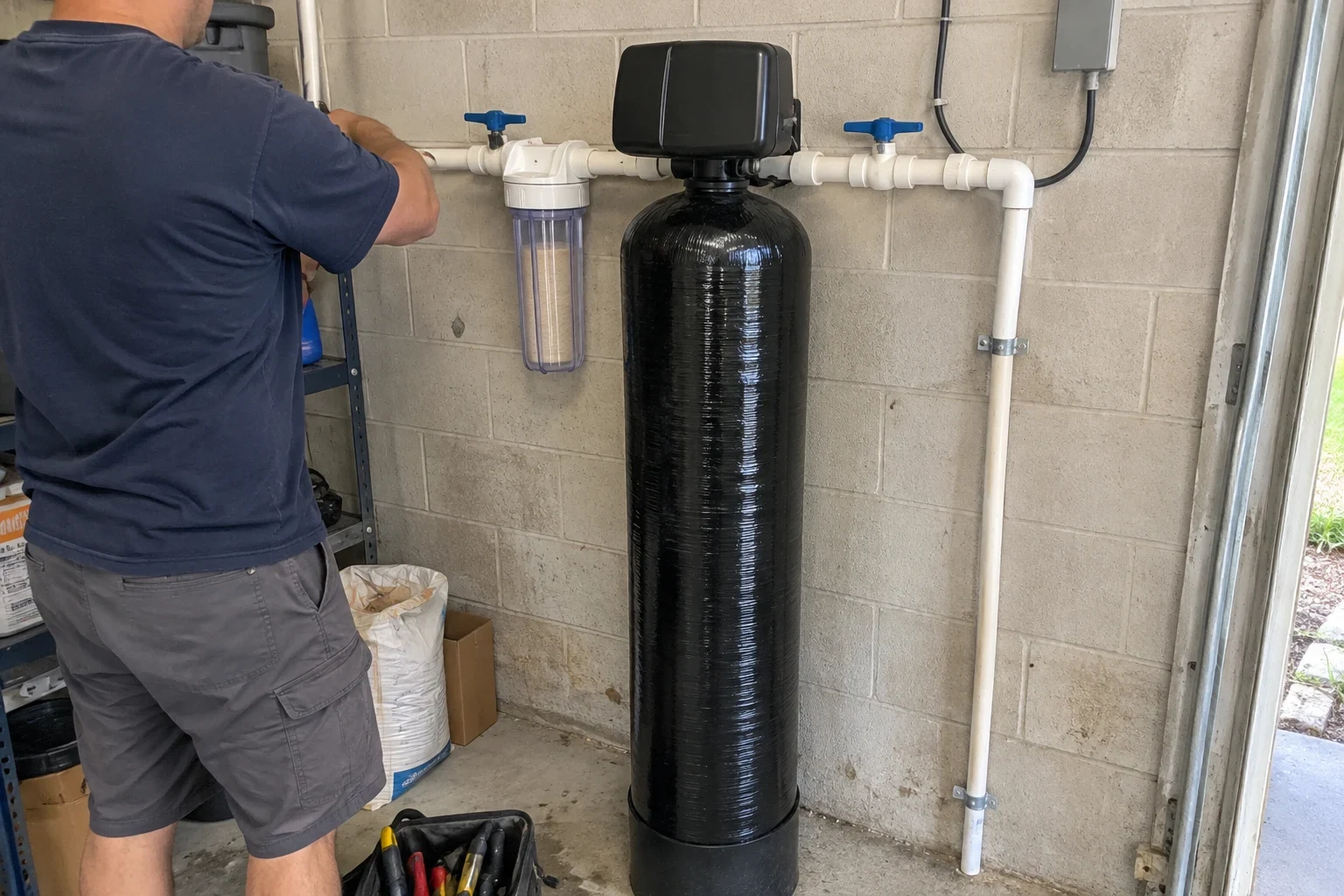
- Catalytic carbon tank at the main line
- The tank goes where water enters your home, often in the garage or utility area. It treats every tap, shower and the line feeding the water heater. Catalytic carbon handles both chlorine and chloramine, so a change at the utility won't catch you off guard.
- Sediment prefilter
- A cartridge ahead of the carbon catches grit and bits of pipe scale. That keeps the carbon bed from clogging and helps it last longer.
- Bypass valve and shutoffs
- We plumb in a bypass so treated water can be turned off for service without shutting off the house. A plumber can also work on your lines later without touching the tank.
- Sorting out outdoor lines
- Sprinklers and hose bibs rarely need filtered water. We talk through which lines stay untreated, because keeping irrigation off the system saves a lot of carbon in a Florida yard.
- Fitting in with your other equipment
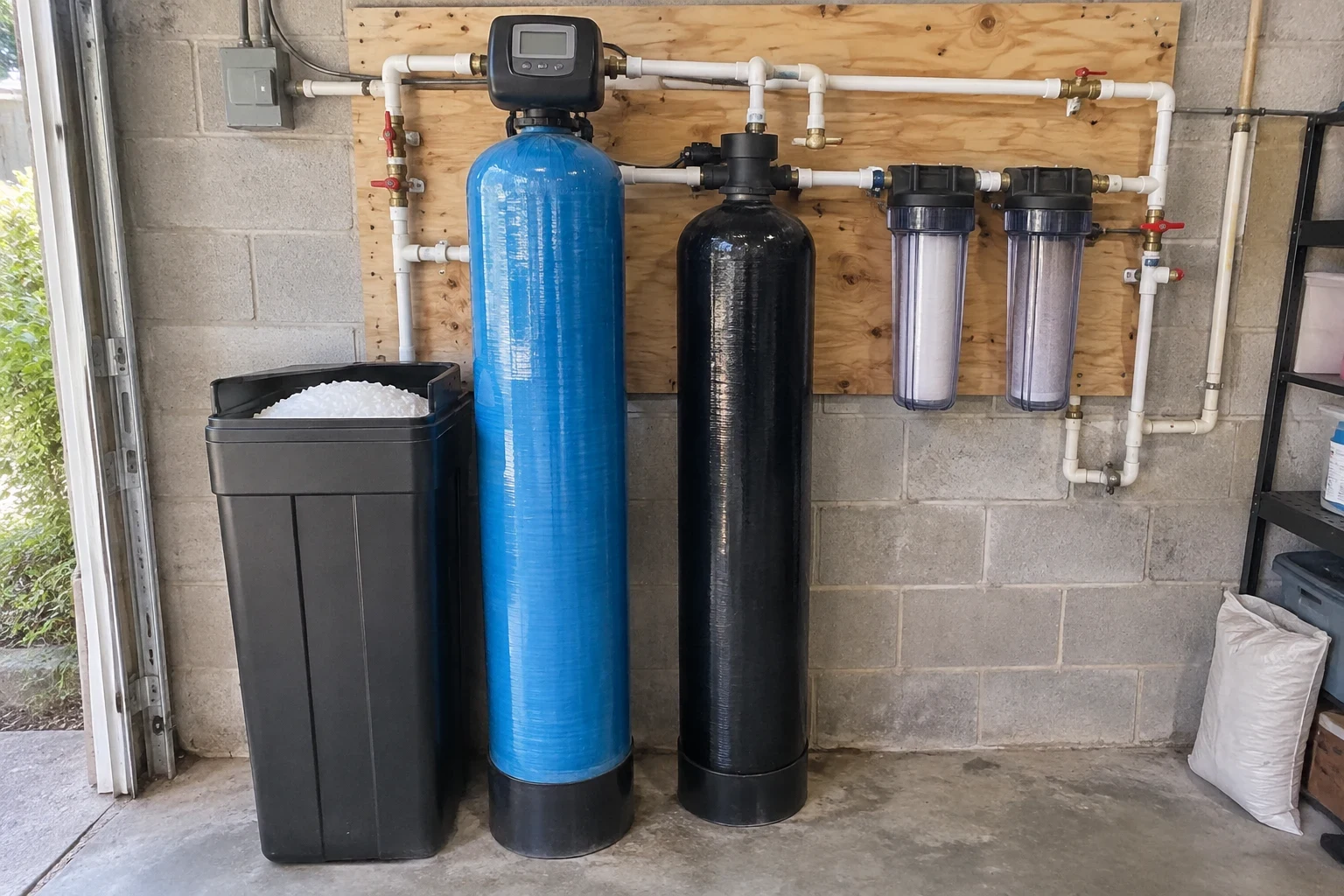
- If you already have a softener or a reverse osmosis unit, we set the order so each part does its job. Carbon placed ahead of a softener also protects the resin from chlorine wear.
- Flush, cleanup and walkthrough
- We flush the new carbon until the water runs clear, clean up the work area and show you the bypass and the prefilter before we leave.
Signs it's time to take the chlorine out
The shower smells like a pool
Hot water drives chlorine off as vapor, and a small bathroom with the door shut traps it. Drinking-water filters at the sink don't touch this.
Coffee, tea and ice taste off
Chlorine flattens the taste of anything brewed and gives ice a faint chemical note. If you're buying bottled water just for the coffee maker, carbon usually fixes that.
Your fish tank needs treatment drops
Chloramine is harmful to fish and doesn't fade when water sits out the way chlorine does. If you dose every tank refill, your water likely carries it.
The pitcher filter only helps sometimes
Small pitcher and fridge filters are often made for chlorine, not chloramine. They also fill up fast in a busy kitchen. Uneven results point to a filter that's outmatched.
Rubber parts wear out early
Chloramine can break down some rubber washers, toilet flappers and gaskets faster than plain water. Replacing them often is a hint.
What sets the price of a carbon system
The price depends on what's in your water and how your home is plumbed. We give you a number after we've seen the main line, not before. These are the things that move it.
Chlorine or chloramine
Catalytic carbon costs more than standard carbon and usually needs a larger bed for enough contact time.
Household size and flow
More bathrooms and more people running water at once call for a bigger tank so the water still gets treated at full flow.
Where the main line is
An open garage wall is quick to tie into. A line buried in a slab, a long run or tight space adds fittings and labor.
Backwashing or upflow design
Some tanks backwash and need a drain and power nearby. Upflow tanks don't, which can save plumbing work in spots without a drain.
Old equipment on the line
Pulling out a worn filter or working around an existing softener adds time. If the old unit is done, our water softener and filtration system replacement service covers the swap.
How a chlorine removal install goes
- 1
A phone call first
Tell us what you're noticing, how many people live in the house and how many bathrooms you have. We'll ask where the main line comes in and set a time to come look.
- 2
Visit and written quote
We find the main line, check for a nearby drain and outlet, and go over your utility's report to confirm chlorine or chloramine. You get a written quote that lists the tank size and parts.
- 3
Install day
We shut the water off just for the stretch where we tie into the main line, then turn it back on. Before that, we lay down floor covers. We set the tank, add the prefilter and bypass, flush the carbon and look over every joint for drips.
- 4
Service from people who know your setup
Your install comes with a 1-year installation workmanship warranty. We stay on call after that too, for routine maintenance, swapping out filters and any service your system needs down the road. The crew that set up your tank is the crew you'll hear from.
Chlorine and chloramine removal questions
How do I know if my water has chlorine or chloramine?
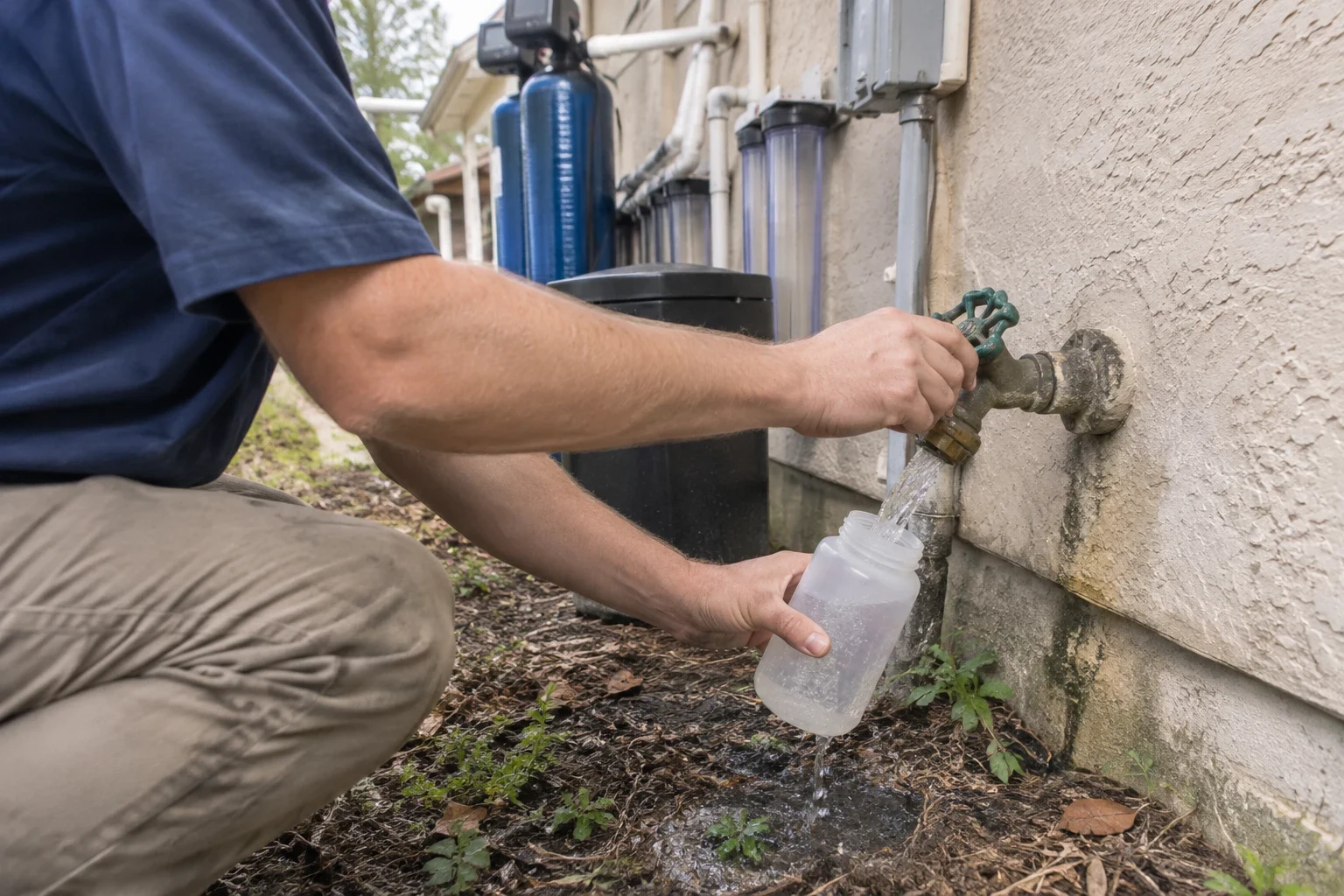
Your water utility publishes an annual water quality report that names the disinfectant it uses. We go over it with you during the visit. Homes on a private well usually have neither, and our well water treatment page covers what does apply there.
Will a regular carbon filter remove chloramine?
Not well. Standard carbon handles chlorine but lets much of the chloramine through. Catalytic carbon with enough contact time is what takes it out, which is why tank size matters as much as the media.
How often does the carbon need replacing?
Whole-house carbon beds last years, not months, but the exact span depends on your water use and tank size. The sediment prefilter gets changed more often. We tell you what to expect for your setup and can handle the replacements when the time comes.
Is it a problem to remove the disinfectant before it reaches my pipes?
In a lived-in home, water moves through the lines quickly, so it isn't a concern for most families. If the house sits empty for a few weeks, run each tap for a minute when you get back.
Do I still need reverse osmosis if I have carbon?
Carbon handles taste and smell at every tap. Reverse osmosis at the kitchen sink goes further for drinking water and removes dissolved minerals and a wider range of contaminants. Plenty of homes do fine with carbon alone, and we'll tell you plainly if reverse osmosis adds anything for you.
Get the pool smell out of your water
Tell us what you're tasting and where your main line comes in, and we'll plan a system that fits your home. We work across Lakeland and nearby towns like Winter Haven and Plant City.